ADA Handicap Available Portable Washroom Rental for Inclusive Event Access
When people intend an event, toilet accessibility often gets dealt with like a logistics line product. It needs to not. For lots of guests, the difference in between feeling welcome and feeling omitted boils down to whether they can pleasantly, safely, and independently utilize the washroom on site.
That is why an ada handicap available portable restroom is not a great extra. It becomes part of fundamental access.
I have actually seen this issue come close to in two very different ways. In one case, coordinators treated ease of access as an afterthought and included a single system late in the process, then put it on uneven ground beside a field. Technically, they had actually rented an ada portable restroom, however functionally they had not developed real accessibility. In one more instance, an occasion team started by asking where guests with flexibility specials needs would certainly park, just how they would certainly take a trip to the entryway, where they would certainly rest, and exactly how they would get to the washrooms without obstacles. The bathroom service became part of that bigger access plan, and the whole occasion really felt different. It really felt considerate.
That difference issues. Leasing ada certified mobile restrooms is about more than checking a box. It has to do with ensuring a person using a wheelchair, walker, scooter, or various other flexibility aid is not compelled to improvise their way with a fundamental human need.
What the ADA needs for portable washroom access
For portable commode leasings in the USA, the controlling federal standard is the 2010 ADA Criteria for Accessible Layout, as translated by the U.S. Gain Access To Board and the Division of Justice. For event organizers and site managers, that suggests an easily accessible system is not simply a bigger stall. It needs to fulfill ease of access needs in a significant, technological way.
At short-lived events and various other sites where mobile single-user toilet devices are offered in a cluster, at least 5 percent of the devices in each collection need to come. That policy is very important since some planners still think accessibility can be dealt with at the location level instead of at each toilet location. The requirement is much more certain than that. If there are mobile toilet clusters, accessibility has to be dealt with within those clusters.
This is one place where language matters. People might look for an ada accessible portable restroom, ada certified mobile toilet, or ada-compliant mobile toilet, and while those expressions audio similar, what really matters is whether the device and its positioning satisfy the applicable access criteria. A vendor can market an ada mobile bathroom rental, yet the coordinator still has to make sure the system is determined appropriately, obtainable by an obtainable course, and set up in such a way that sustains independent use.
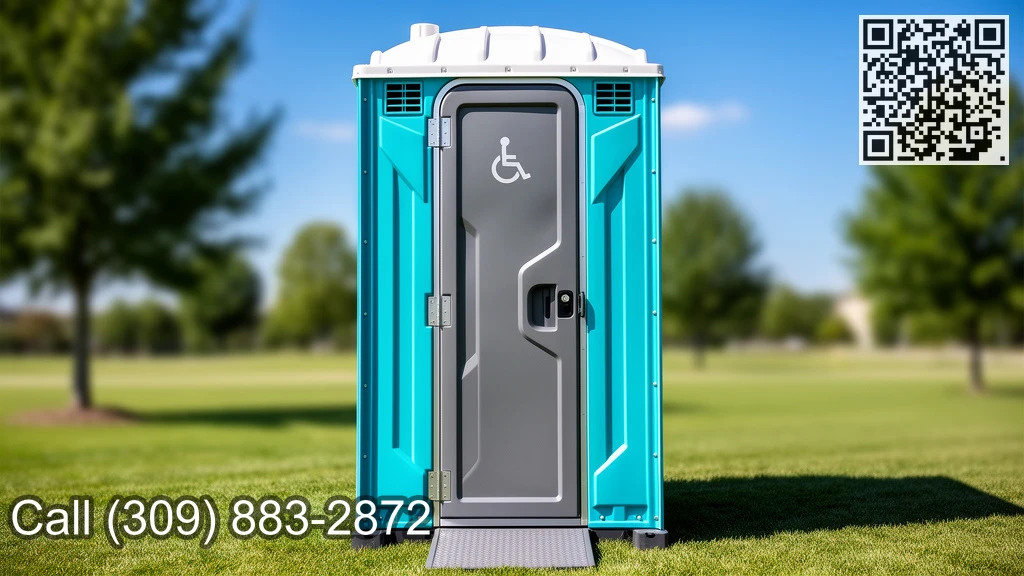
Accessible portable toilet units should likewise be understood the International Symbol of Access. That noting is not ornamental. It aids people find the appropriate unit promptly, particularly in big or crowded occasion settings where a person might already be dealing with time stress, pain, exhaustion, or embarrassment.
A certified device is only component of the picture
This is where excellent purposes typically fall apart.
A site can rent out the ideal ada-compliant mobile restrooms and still fail visitors if the bordering configuration is wrong. The standards call for an easily accessible course and available entry. If ramps or landings are needed, those must comply with ADA technical demands too. Simply put, accessibility does not start at the door of the system. It begins where an individual initially requires to travel.
I have enjoyed occasion teams concentrate intensely on phase style, catering circulation, and signs, after that put the accessible restroom behind fence, over soft turf, or past a muddy slope after rainfall. No one set out to exclude any person, but exemption can take place silently via bad placement. A visitor may not complain. They may simply leave early, prevent fluids, or choose not to participate in next time.
That is why an ada certified easily accessible mobile restroom needs to be considered in context. The path to it matters. The ground conditions issue. The entry matters. The maneuvering space issues. The surrounding traffic pattern matters. A narrow void in between other units, a short-lived aesthetic lip, or a path blocked by power cables can make the restroom pointless even if the system itself is technically the right model.
What available mobile bathroom design really involves
The technological demands for available mobile units are not obscure. They include toilet-room demands such as component clearances, turning room, door navigating clearances, and suitable grab-bar and water-closet clearance rules. Those information exist due to the fact that access relies on real body language and real equipment dimensions, not on labels.
That point obtains shed when individuals utilize "ADA" as shorthand for "roomier." An ada compliant portable toilet is not simply a larger box. The interior needs to sustain approach, transfer, transforming, and use. Door steering space is not trivial. Neither are clearances around the commode. Get bars are not optional accessories. These are functional aspects that influence whether somebody can utilize the washroom separately or needs help they did not want to need.
This is one factor experienced organizers ask far better concerns of suppliers. Not simply "Do you have an ADA system?" yet "Is this unit meant to meet ADA availability standards for mobile use?" and "What website problems do you need from us so it functions accessibly?" Those conversations tend to be much more valuable than buying on device size alone.
The 5 percent rule sounds simple, yet planning hardly ever is
The requirement that at least 5 percent of systems in each cluster be accessible noises simple. In technique, it forces coordinators to think very carefully regarding just how they disperse restrooms across a site.
A typical error is focusing all accessible devices in one area while positioning basic devices throughout the rest of the premises. That may seem effective from a distribution point ofview, but it can produce lengthy travel distances for people that need the obtainable unit. The scoping requirement for each cluster pushes planning in a much better direction. If restrooms are organized in greater than one location, ease of access needs to turn up in more than one location too.
This has functional consequences for festivals, fairs, races, area events, outside events, and other occasions with spread-out impacts. If visitors can access food, seating, and amusement from several zones, toilet accessibility need to track with that format as carefully as possible. Or else, the occasion connects, even if inadvertently, that some participants are expected to prepare around inconvenience that others never notice.
There is also a dignity problem here. The farther away the easily accessible alternative is, the even more a visitor might have to request instructions, request aid, or leave companions behind. Small planning selections can either protect privacy and independence or chip away at both.
Placement can make or break accessibility
If I needed to call the single most overlooked factor in ada mobile commode requirements, it would certainly be placement. Coordinators sometimes presume that when the appropriate ada certified portable toilets show up, the job is done. It is not.
The course to the device requires to be accessible. The entrance requires to be easily accessible. If a ramp or landing becomes part of the configuration, it has to meet the ADA technical requirements. Those are not side notes. They become part of the whole.
This becomes specifically crucial at momentary events because the setting alters rapidly. Ground that looked firm throughout configuration can soften. A route that was open at 8 a.m. Can be obstructed by obstacles, vendor stock, or group control tools by noontime. A system that showed up from the main path can vanish behind parked service cars after load-in.
The ideal occasion groups review access after setup instead of trusting the website map. They walk the course a guest would take. They look for slopes, pinch points, puddles, and disputes. They ask whether a person making use of a wheelchair can come close to, get in, maneuver, and leave without requiring a person to stable the door or get rid of a path.
That practice captures issues early, while they are still easy to fix.
Why the icon matters greater than people think
Accessible portable units should display the International Icon of Ease Of Access. On paper, that can appear like a small need compared to path and clearance issues. In technique, clear recognition has a straight impact on usability.
At active events, people usually find washrooms from a range. If the obtainable system is not plainly marked, a guest may waste time coming close to typical devices that do not work for them. In a jampacked setting, that can be exhausting and demanding. It can likewise result in the unpleasant experience of having to ask unfamiliar people or staff where the accessible bathroom is.
Good gain access to is not only about whether a feature exists. It is additionally about whether people can discover it without friction.
The construction-site exemption is narrow
This is a location where confusion creeps in.
There is a difference in the ADA requirements for mobile commode devices at building websites utilized exclusively by construction employees. That scenario was treated differently under the mentioned 1991 requirement. Some individuals become aware of that exemption and mistakenly presume mobile toilet ease of access is generally adaptable or optional.
It is not.
For basic mobile toilet services, consisting of occasion use, the accessible-unit need continues to be. If you are arranging washrooms for a public or guest-facing setup, it is high-risk to borrow assumptions from construction-site policies that do not fit the circumstance. I have seen planning conversations go off track because somebody slightly kept in mind an exemption without recognizing exactly how restricted it was.
When there is any uncertainty, the safest approach is to treat ease of access as a core demand and confirm that the system type, quantity, and positioning straighten with the ADA requirements that govern the rental context.
Renting the best system starts with much better conversations
If you are setting up an ada mobile toilet rental, the quality of the discussion with the supplier matters almost as high as the device itself. A lot can be cleared up prior to delivery if the organizer shares truthful details regarding the site.
A confined urban impact, a sloped park, a multi-zone event field, and an institution fundraising event on sidewalk all existing various access obstacles. The unit may be comparable, but the setup problems are not. That is why the most useful preparation conversations specify. Where will the collection be found? What surface area will support the course? Will a ramp or landing be essential? How will certainly the system be recognized and kept obtainable throughout the event?
The answers do not need to be grand or technical to be effective. They require to be realistic.
Here are five questions worth working out prior to delivery:
- How several units will certainly remain in each collection, and does each cluster meet the accessible-unit requirement?
- Will guests have the ability to get to the device by an obtainable route from the occasion's major obtainable areas?
- Is the entrance established accessibly, including any kind of ramp or landing that might be needed?
- Is the unit plainly understood the International Symbol of Accessibility?
- Has someone walked the real route and inspected problems after setup, not just on paper?
That short checklist conserves an unexpected quantity of trouble.
Accessibility is part of hospitality
There is a propensity to discuss compliance in a completely dry, defensive way. That misses the human fact. For guests who need an ada obtainable mobile restroom, bathroom accessibility influences whether an event really feels feasible at all.
Some attendees plan around pain, energy limits, transfer requirements, or flexibility tools whenever they leave home. They observe information others miss since those information can hinder a trip. A poorly positioned toilet can turn a household party right into a demanding endurance examination. A tactical one can permit a person to relax and stay longer.
I bear in mind a community occasion where the easily accessible washroom positioning was managed especially well. It was not concealed off sideways, and it was not set so far apart that it seemed like a different accommodation. It was simply incorporated into the centerpiece circulation, easy to locate, and easy to reach. No one made a speech concerning it. No one needed to. The setup quietly interacted that impaired visitors were anticipated and welcomed.
That is what thoughtful planning does at its ideal. It eliminates the requirement for people to request for special handling in the very first place.
Broader enforcement makes this worth taking seriously
Accessibility compliance is not becoming less appropriate. If anything, it is being applied within a broader compliance environment across sectors. One recent example is the Department of Justice advice prolonging a web and mobile access target date for state and city governments to April 26, 2027 for larger entities. That update has to do with digital access, not portable restrooms, but it shows a larger truth. ADA conformity stays energetic, noticeable, and consequential.
For occasion coordinators, municipalities, locations, and provider, the lesson is straightforward. Access should not be treated as a single documents workout or a low-priority operations detail. It belongs in regular planning, having, setup, and last walkthroughs. The companies that do this well typically are not responding to one narrow rule. They have developed the behavior of asking, very early and continually, https://chancewckq402.yousher.com/ada-portable-toilet-rental-and-the-international-icon-of-availability whether impaired individuals can in fact utilize what is being offered.
That frame of mind often tends to enhance greater than conformity. It boosts trust.
Common judgment calls at real events
Not every website provides tidy conditions. Momentary occasions frequently entail concessions, weather changes, limited shipment windows, and completing needs for space. That is precisely why judgment matters.
Sometimes the very best bathroom location for basic crowd circulation is not the best one for obtainable directing. Often a cluster needs to be moved closer to steady gain access to courses even if that makes complex service logistics. Occasionally the available device should be a lot more main, not much less, since a lengthy detour creates an obstacle no person meant. These are not abstract problems. They show up constantly.
The right response is hardly ever the one that is simplest only for configuration staffs. It is the one that maintains sensible access for guests that depend on it.
An organizer does not require to become a legal specialist to make far better choices. However they do require to quit considering the ada-compliant mobile toilet as a stand-alone object. It is part of an experience. If the course is blocked, if the entryway is incorrect, or if the unit is tough to discover, the guest does not experience access. They experience a problem.
A better typical for inclusive events
Inclusive event accessibility is built via regular options made very carefully. Bathroom rentals are just one of those choices. When coordinators provide ada certified available mobile restrooms that are properly counted, properly noted, and effectively put, they do more than satisfy a criterion. They decrease tension, maintain dignity, and make participation feasible for even more people.
That is worth taking seriously.
An ada handicap obtainable mobile restroom ought to never be treated as a symbolic gesture parked someplace on site. It ought to be chosen and set up with the same degree of purpose that goes into entries, seats, and circulation. At temporary events, ease of access lives or dies in the information, the path, the entryway, the turning area, the clearances, the exposure, the collection layout.
If your event consists of portable restrooms, then restroom access belongs to the event experience you are in charge of. The bright side is that this is one location where thoughtful planning goes a long method. A well-handled ada mobile restroom setup tells guests something vital without a solitary statement: you planned for them to be here.
 Ask ChatGPT
 Ask Grok
 Ask Perplexity
 Ask Claude
 Ask Google AI
 Ask You